

"Operating a mini excavator? Then this one's for you."
Mini excavators may be small in stature, but they pack a surprising punch. Your mini excavator is like a mini version of the standard one—just as capable in the right setting, but better at squeezing into places the big guys wouldn't dare try.
Typically weighing between 1 to 10 tons, these compact workhorses excel in confined spaces, urban construction sites, landscaping projects, and utility work.
Core Assemblies & Mechanical Structure
House / Upper Structure + Cab & Engine
The "house" is the command center. It holds the engine, hydraulic pump, control distribution system, and the operator cab—all perched on a swing bearing so the entire top half can spin 360°.
Inside the cab, you'll find controls, safety systems, and sometimes luxuries like climate control. Check out our operator cabin parts for replacements and upgrades.
Undercarriage
This is the mini excavator's backbone. The undercarriage includes:
- Tracks – Rubber (quiet, gentle on surfaces) or steel (tough, for muddy/rocky jobs)
- Drive Sprockets – Transfer engine torque to the tracks
- Idlers – Keep the track properly tensioned
- Rollers – Bear the machine's weight and facilitate smooth track movement
Workgroup (Boom, Stick, & Bucket)
The boom is the first arm section. The stick extends from the boom and controls digging depth. The bucket is where the action happens—digging, scooping, trenching, or grading.
Counterweight & Swing Gear System
The counterweight keeps you from tipping over when lifting heavy loads. The swing gear lets you pirouette the entire machine 360°.
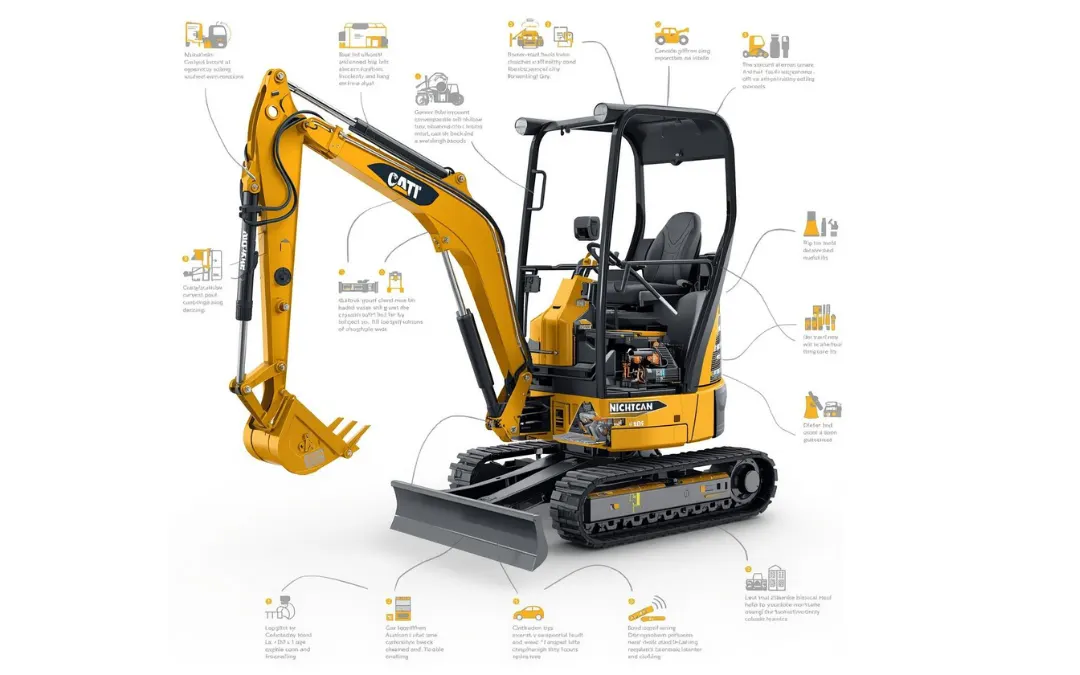
Complete mini excavator component breakdown
Hydraulic Systems
If the engine is the heart, hydraulics are the lifeblood. This system includes:
- Pump – Pressurizes the hydraulic fluid
- High-pressure lines & control valves – Direct fluid where it's needed
- Cylinders – Move the boom, stick, and bucket
- Hoses – Carry pressurized fluid; inspect regularly
Browse our complete hydraulic parts collection for replacements.
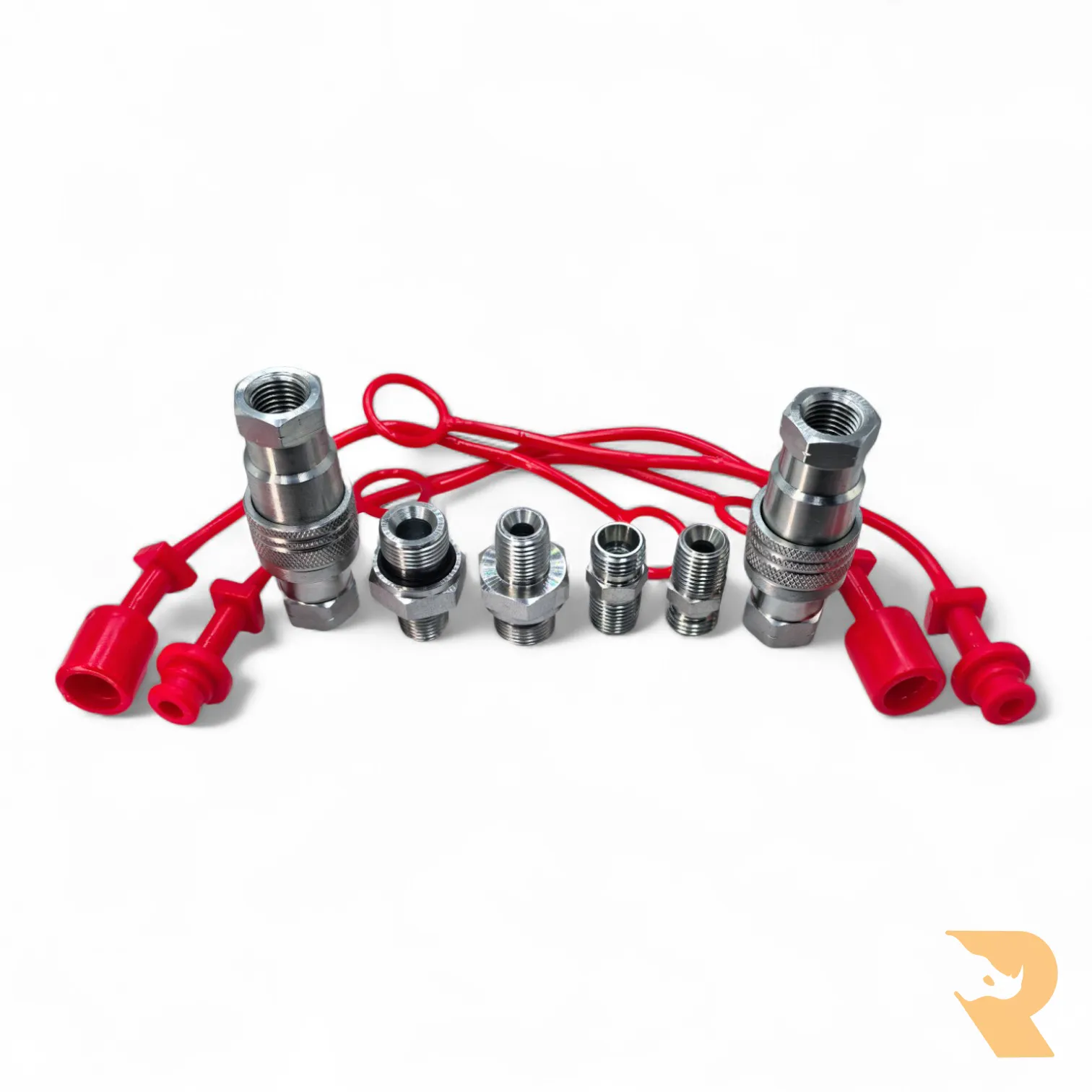
Quality hydraulic hoses are essential for reliable operation
Attachments & Couplers
Quick couplers let you change attachments without breaking a sweat. Popular attachments include:
Component Cheat Sheet
| Component Group | Key Parts | Function & Purpose |
|---|---|---|
| House / Cab | Engine, operator controls, hydraulic pump | Control Center: Operator station, powerhouse |
| Undercarriage | Tracks, sprockets, rollers, idlers | Mobility, stability, ground engagement |
| Workgroup | Boom, stick, bucket | Excavation, reach, load manipulation |
| Swing System / Blade | Swing gear, counterweight, backfill blade | Rotation and stabilization |
| Hydraulic System | Pump, lines, cylinders, valves | Powers all motions and attachment control |
| Attachments/Couplings | Quick coupler, buckets, hammer, auger | Versatility, task-specific performance |
A mini excavator isn't just "a small digger." It's a carefully engineered bundle of power, precision, versatility, and adaptability. Know your components, keep them in shape with proper maintenance, and you'll have a machine that's ready to handle just about anything.
Browse our complete range of spare parts to keep your mini excavator running at peak performance.